Healthcare
Your Health, Our Priority—Always Here for You!
Access appointments, medical information, and support effortlessly with our 24/7 IVR system, designed to make healthcare simpler and faster.
How We Help the Healthcare!
In this era of technology, every industry is focusing on a high level of satisfaction for their customers. The Healthcare Industry is one of them. Today, every healthcare industry counters the stereotype of clinics and healthcare facilities, i.e., waiting outside doctors’ cabins, waiting for an ambulance, waiting for admission, etc.
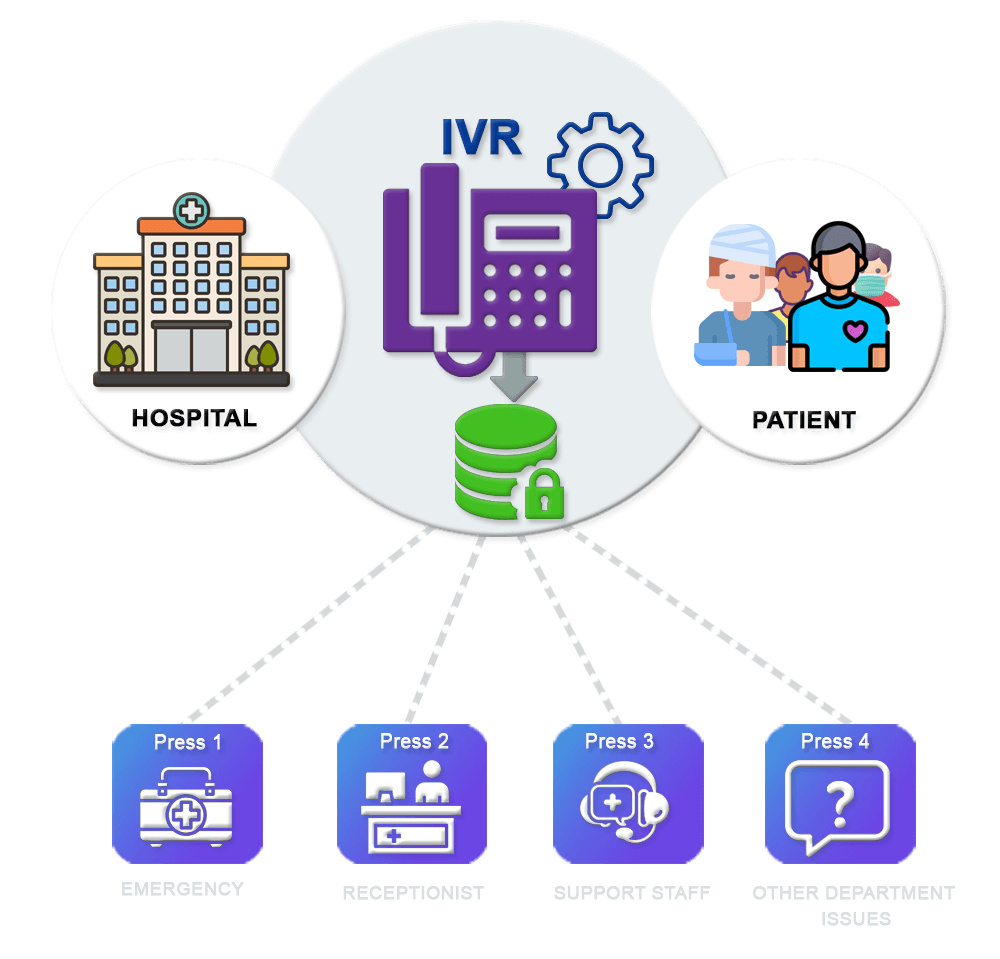
Patients while making calls to hospitals, not using IVR services, continuously have to wait for booking, ambulance, doctors, etc., till the phone is answered, as the receptionist can answer a single call at a single time only. By this process, patients cannot get connected with the hospital in case of an emergency or any query.
To solve all these difficulties, IVR is used as a crucial element of improving customer service in the Healthcare Industry or Hospitals.
IVR’s Benefits to Hospitals in Rural Areas
In rural areas of India, where the literacy rate is low and people are not much aware of the facilities provided by healthcare industries or hospitals, IVR systems are very much beneficial because IVR is easy to use and does not require high literacy levels.
As IVR is based on Dual Tone Multiple Frequency (DTMF) or speech input and the outcome is also based on speech, no written literacy is needed in understanding the information given by IVR systems. By customized IVR, hospitals give access to IVR in regional languages in those rural areas.
There is a huge problem of internet connection, and people in rural areas cannot access modern technologies that need internet connections. However, IVR systems are designed in such a way that they do not require an internet connection, and they can be used only by simply dialing a number and putting in some DTMF or speech.
Another benefit of IVR systems in rural areas is that it saves time. Normally, to obtain medical treatment, you need to visit a hospital or doctor. But with IVR, it can be done remotely. Many people in rural areas could not get medical treatment because they are not able to go to a hospital or not able to read medical information. Now, this information can be accessed on IVR without visiting hospitals or doctors. It also reduces the cost of transportation and saves time.
Benefits of Healthcare Solution
Reduced Costs
By making routine calls automated, the hospital doesn't need many call center employees, and this reduces cost.
Efficient Call Routing
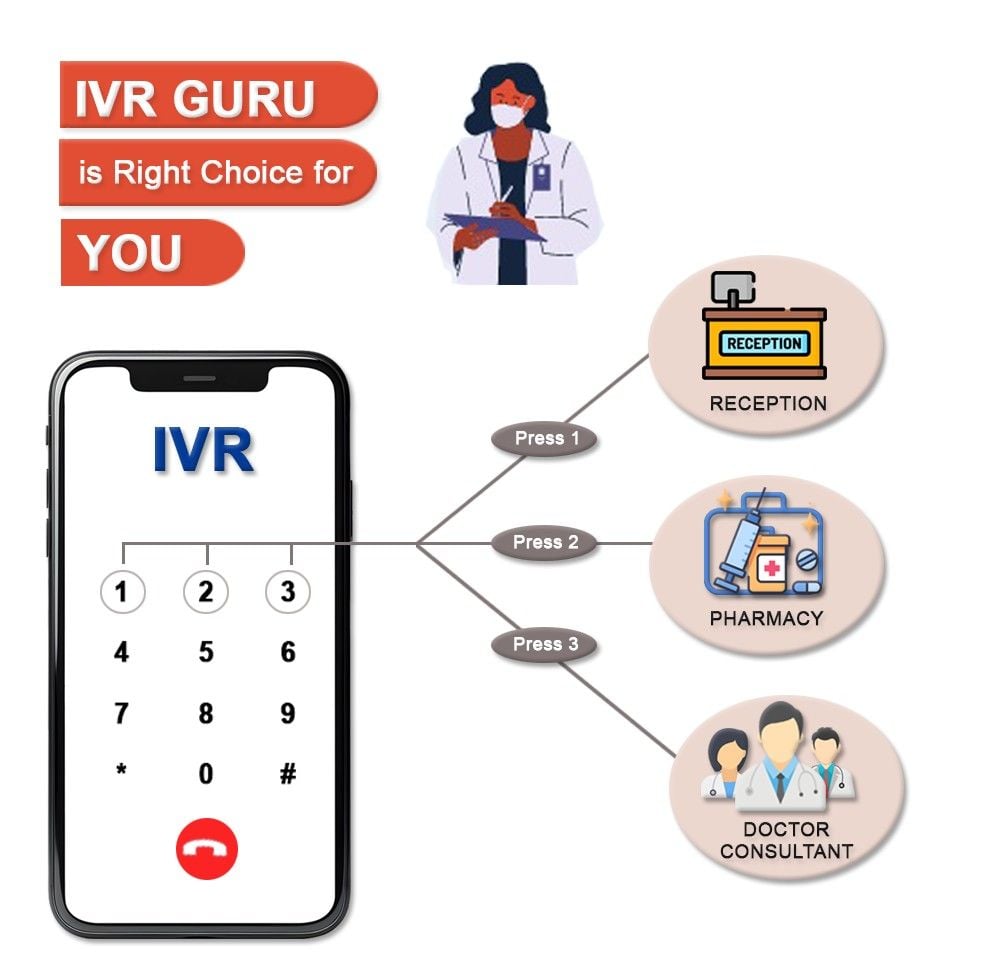
The call will automatically go to the appropriate department or doctor depending on the need of the patient, thus nobody is being transferred multiple times.
Multilingual Support
The system can provide information and services in multiple languages, making it easier for everyone to get the help they need.
Data Collection
It gathers patient information quickly and accurately during calls, helping the hospital keep better records and serve patients more effectively.
Features of Healthcare Solution
Patient Information Retrieval
Accumulation of patient records, such as medical history and insurance details through the IVR system to approach them.
Call Routing
Managing calls to relate them to the relevant department or healthcare provider according to the patient's requirement.
Reminder Notifications
Automatic voice reminders of appointments, drug refills, and follow-up care.
Patient Feedback Collection
Collection of patient satisfaction feedback through interactive prompts while calling.
After-Hours Support
Providing basic information and emergency contact details outside of regular operating hours.
How IVR is Advantageous to Healthcare
Automate Call Answering and Routing
With an IVR, your patient no longer has to wait for getting an answer from the hospital. As soon as the caller calls on the IVR number, the caller will be welcomed by a welcome tone to assist them, asking questions to learn their reason for calling and direct them to the right extension. It reduces the burden on your receptionist, and they can manage the call and can continue their other responsibilities simultaneously.
Easily Provide Information
Not only hospitals, IVR is beneficial to provide information to clinics, laboratories, blood banks, etc. All this information is easily accessible. It provides the information and guidance regarding working hours, appointment schedules, ambulance availability, etc.
Maintain Patient History Data
IVR facilitates recording the patient’s communication with the doctor on call. It allows doctors and patients to repeat the call as many times as they find it necessary to understand the medical history, facilitating organizing problems and prioritizing them.
Provide 24*7 Access for Emergencies
IVR allows 24*7 emergency access to patients even after working hours without an operator to receive the calls. The emergency calls can be routed to the doctor or nurse extension without needing extra staff or infrastructure.
Increase Productivity of Staff
IVR facilitates handling almost all the routine telephone work without the involvement of staff, which saves their time. Staff can complete other tasks more quickly and efficiently. This means staff can get their work done without needing to work overtime. Employees do not feel overburdened; it boosts satisfaction at the workplace and increases the productivity of staff.
Administrative Operation and IVR
In healthcare and hospitals, IVR systems are effectively used for administrative operations, i.e., medicines record, prescription refills, patient history, medical reports, patient information services, automated advance booking of beds, appointment scheduling, appointment reminders, laboratory reports, patient diet services, and many other applications.
Request Demo